Few objects represent Scottish hospitality quite like the quaich. Known as the cup of friendship, this distinctive two-handled drinking vessel has been part of Scottish culture for centuries. From Highland clan gatherings to modern weddings, the quaich continues to symbolise trust, welcome, and shared celebration.
In this guide we explore the history of the quaich, where it came from, how it was used, and why this simple cup still holds a special place in Scotland’s traditions today.
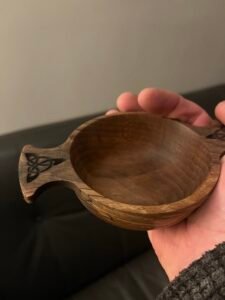
What Is a Quaich?
A quaich (pronounced quake) is a shallow drinking cup with two flat handles, traditionally used in Scotland for sharing a drink between friends and guests.
The name comes from the Scottish Gaelic word “cuach,” meaning cup or drinking vessel. Over time the spelling evolved into the familiar “quaich.”
The most recognisable feature of a quaich is its two handles, known as lugs. These handles allow the cup to be passed easily from one person to another, reinforcing the idea that the drink is meant to be shared.
Historically, quaichs were used to serve whisky or ale as a gesture of hospitality. Offering someone a drink from a quaich was a way of saying:
“You are welcome here.”
The History of the Quaich: Scotland’s Ancient Drinking Cup
Few objects represent Scottish hospitality quite like the quaich. Known as the cup of friendship, this distinctive two-handled drinking vessel has been part of Scottish culture for centuries. From Highland clan gatherings to modern weddings, the quaich continues to symbolise trust, welcome, and shared celebration.
In this guide we explore the history of the quaich, where it came from, how it was used, and why this simple cup still holds a special place in Scotland’s traditions today.
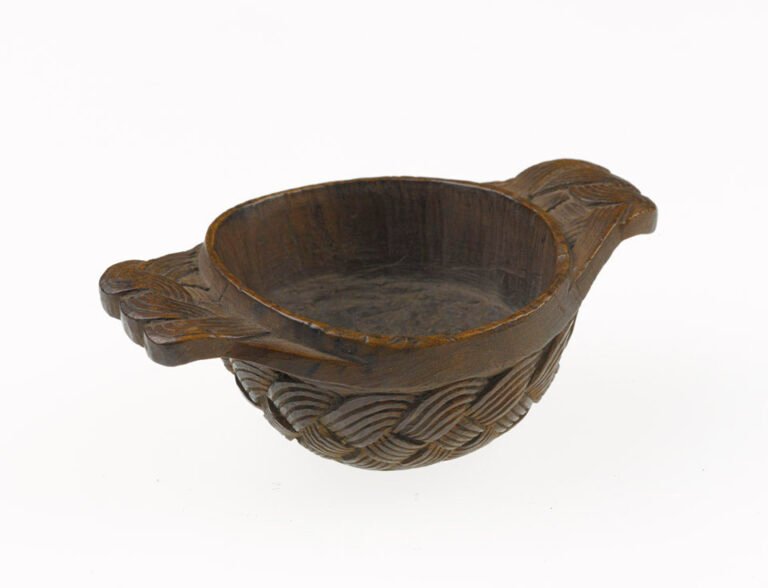
This Image is taken from the National Army Museum online collection
Quaich or drinking vessel, Scotland, 1700 (c) NAM. 1998-01-122-1 |
What Is a Quaich?
Early Origins of the Quaich
The exact origin of the quaich is difficult to pinpoint, but historians generally trace its use back to the Scottish Highlands during the 17th century.
Early examples were typically carved from wood, often from a single block of hardwood such as sycamore or maple. These simple wooden cups were practical, durable, and easy to produce with the tools available at the time.
Many early wooden quaichs were also strengthened with a small decorative metal band around the rim. This helped prevent the wood from splitting and added a touch of craftsmanship to the design.
Some of the earliest surviving examples of quaichs can still be found in museum collections, demonstrating that even centuries ago these cups were valued possessions.
The Quaich in Highland Hospitality
In the Highlands of Scotland, hospitality was an essential part of life. Travellers, visitors, and clan allies were welcomed with food, shelter, and often a drink.
The quaich played a key role in this tradition.
When a guest arrived, a host might offer them whisky in a quaich as a symbol of friendship and goodwill. The guest would drink from the cup and return it, often followed by a toast.
This simple exchange carried great meaning. Sharing a drink from the same cup showed trust between host and guest.
Unlike a mug or tankard, which belonged to a single person, the quaich was meant to be passed between people.
This act of sharing reinforced social bonds within Highland communities.
Why Quaichs Have Two Handles
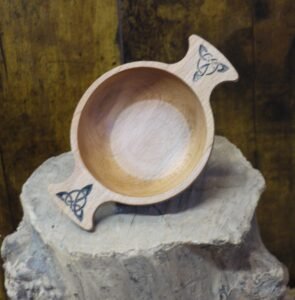
The two handles of the quaich are not just decorative; they have symbolic and practical origins.
One popular explanation is that the handles allowed the drinker to hold the cup with both hands, making it difficult to conceal a weapon.
In earlier centuries, when personal security was not always guaranteed, this gesture signalled that the person drinking came in peace.
Holding the cup with both hands also made it easier to pass around during a gathering, ensuring the drink could be shared smoothly between friends.
Over time the two handles became a defining feature of the quaich’s design.
Materials Used in Traditional Quaichs
While early quaichs were typically wooden, the materials used to make them evolved over time.
Wooden Quaichs
The earliest and most traditional quaichs were carved from hardwood. Wooden quaichs remain popular today because they reflect the cup’s original Highland roots.
Silver Quaichs
By the 18th century, wealthy families and clan leaders began commissioning silver quaichs. These were often highly decorative and sometimes engraved with family crests.
Pewter Quaichs
Pewter also became a common material, offering a durable and affordable alternative to silver.
Despite the variety of materials, the basic design of the quaich has remained remarkably consistent for centuries.
The Quaich and Scottish Clans

Clan culture played an important role in the spread of the quaich tradition.
Clan chiefs would often use quaichs when hosting important visitors or celebrating significant occasions. Passing the quaich around a gathering reinforced loyalty and camaraderie within the group.
Some historic quaichs were engraved with clan symbols or family names, turning them into treasured heirlooms passed down through generations.
Even today, many families in Scotland keep a quaich as part of their heritage.
The Quaich as “The Cup of Friendship”
Over time the quaich became widely known as the cup of friendship.
This nickname reflects its most important role: bringing people together.
Whether used to welcome a guest, celebrate a victory, or mark a special occasion, the quaich symbolised shared goodwill.
Unlike ordinary drinking vessels, the quaich was never intended for solitary use. Its purpose was always communal.
That spirit of shared celebration remains central to the tradition today.
The Quaich in Modern Scottish Culture
Although the quaich dates back centuries, it is far from a historical curiosity. The tradition is still very much alive in modern Scotland.
One of the most popular modern uses of the quaich is in wedding ceremonies.
During a quaich ceremony, a couple shares a drink from the cup to symbolise:
- trust
- unity
- friendship
- the sharing of life together
The ritual adds a meaningful connection to Scottish heritage while creating a memorable moment in the ceremony.
Quaichs are also commonly used for:
- welcoming guests
- special toasts
- clan gatherings
- milestone celebrations
Because of its symbolism, the quaich is often given as a gift to mark important life events.
Why the Quaich Tradition Has Endured
Many traditions fade with time, but the quaich has endured for a simple reason: its meaning remains relevant.
At its heart, the quaich represents something universal — friendship and hospitality.
The act of sharing a drink from the same cup is a powerful reminder that human connections matter more than the vessel itself.
In a world that has changed dramatically since the 17th century, the simple gesture of raising a cup together still carries the same warmth it always has.
A Small Cup With a Big Story
From its beginnings in the Highlands to its place in modern celebrations, the quaich has travelled a long and fascinating path through Scottish history.
What began as a practical wooden drinking cup became a powerful cultural symbol of trust, friendship, and welcome.
Today the quaich continues to connect people to Scotland’s heritage, reminding us that sometimes the simplest traditions are the ones that last the longest.
So the next time a quaich is raised in a toast, remember that you are not just sharing a drink — you are taking part in a tradition that has been bringing people together for centuries.