
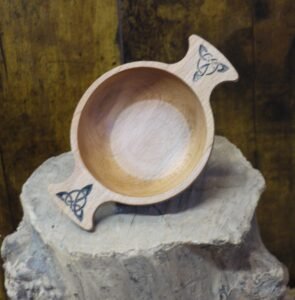
The Scottish wooden quaich is one of Scotland’s oldest traditional drinking vessels. The word quaich comes from the Scottish Gaelic cuach, meaning “cup,” and written records date the term back to at least the 16th century.
Early Origins of the Wooden Quaich
The earliest quaichs were made from wood, making them both practical and durable for everyday Highland life. Turned from a single piece of hardwood such as sycamore or alder, these shallow bowls featured two small horizontal handles, known as “lugs.”
The twin handles were more than decorative. Drinking with both hands showed trust — you carried no weapon — making the quaich a quiet symbol of peace and goodwill.
A Symbol of Scottish Hospitality
Over time, the quaich became closely associated with
hospitality and shared drink. Often used for whisky or ale, it was passed from
hand to hand as a gesture of friendship and unity. Because of this tradition,
it is now widely known as Scotland’s “cup of friendship.”
During the 17th and 18th centuries, silver-mounted and
engraved quaichs appeared, particularly among wealthier families, though wooden
versions remained common.
From Everyday Cup to Ceremonial Tradition
By the 19th century, everyday use declined, but the quaich experienced a revival during the Victorian era’s renewed interest in Highland culture. From then on, it became firmly established as a ceremonial vessel.
Today, wooden quaichs are used at:
- Scottish weddings
- Burns Suppers
- Clan gatherings
- Military and civic presentations
The Enduring Legacy of the Wooden Quaich
Though styles have evolved, the essence remains the same: a shared cup, passed between hands, symbolising trust, unity, and welcome.
The wooden quaich is not simply a decorative piece of Scottish heritage — it is a living tradition rooted in centuries of craftsmanship and hospitality.
The Scottish wooden quaich is one of Scotland’s oldest traditional drinking vessels. The word quaich comes from the Scottish Gaelic cuach, meaning “cup,” and written records date the term back to at least the 16th century.
Early Origins of the Wooden Quaich
The earliest quaichs were made from wood, making them both practical and durable for everyday Highland life. Turned from a single piece of hardwood such as beech, sycamore or alder, these shallow bowls featured two small horizontal handles, known as “lugs.”
The twin handles were more than decorative. Drinking with both hands showed trust — you carried no weapon — making the quaich a quiet symbol of peace and goodwill.
A Symbol of Scottish Hospitality
Over time, the quaich became closely associated with hospitality and shared drink. Often used for whisky or ale, it was passed from hand to hand as a gesture of friendship and unity. Because of this tradition, it is now widely known as Scotland’s “cup of friendship.”
During the 17th and 18th centuries, silver-mounted and engraved quaichs appeared, particularly among wealthier families, though wooden versions remained common.
From Everyday Cup to Ceremonial Tradition
By the 19th century, everyday use declined, but the quaich experienced a revival during the Victorian era’s renewed interest in Highland culture. From then on, it became firmly established as a ceremonial vessel.
Today, wooden quaichs are used at:
- Scottish weddings
- Burns Suppers
- Clan gatherings
- Military and civic presentations
The Enduring Legacy of the Wooden Quaich
Though styles have evolved, the essence remains the same: a shared cup, passed between hands, symbolising trust, unity, and welcome.
The wooden quaich is not simply a decorative piece of Scottish heritage — it is a living tradition rooted in centuries of craftsmanship and hospitality.